
Briefing a Live Event Crew So Nothing Is Left to Chance
A practical walk through the on-site briefing for a conference or live broadcast: what to prepare, who needs to hear what, and how to keep a crew calm once the doors open.
Start the briefing before anyone arrives
The crew briefing is not a speech given at the load-in door. It starts a week or more earlier, with a single written document that every person on the job can read in ten minutes. In our on-site support work, we begin with the running order, the venue plan and a contact sheet, and we send them to the producer, the technical director and the venue manager together so that nobody works from a different version.
Keep the document short and honest. One page for the show, one page for the room, one page for people. If a detail is still unknown, say so and name who will confirm it and by when. A gap that is written down gets closed; a gap that everyone assumes someone else has covered tends to surface during the rehearsal, when fixing it costs the most.
Send it in mid autumn, when conference calendars fill and venues are booked back to back, with a clear request for corrections rather than a request for approval. People answer corrections far more readily than they answer a vague invitation to comment.
- Running order with timings
- Venue plan marked with power and cable routes
- Contact sheet with mobile numbers
- Names of the person in charge of each area
What goes on the venue page
The venue page answers the questions a crew asks within the first five minutes on site. Where is the loading bay, and what are its hours? Which doors can be propped open? Where does the mains supply come from, and how many circuits are really available to us? Walk the room beforehand, or ask the venue for photographs of the stage, the rear of house and the route between them.
Mark sightlines on the plan. A camera position that looks fine on paper may lose the speaker behind a pillar or a lectern light. Note ceiling heights, rigging points and any restriction on fixing things to walls. These are small facts, but they decide where the cameras, the delay speakers and the cable runs can sit.
Add a line on house rules: noise limits during load-in, lift capacity, fire exits that must stay clear. Crews accept a restriction readily when they hear it early and resent it when it arrives as a reprimand.
- Loading access and permitted hours
- Available power and distribution points
- Rigging limits and ceiling height
- Fire exits and routes that must stay clear
Give each role one clear sentence
On the people page, write one plain sentence for each role: what that person is responsible for, and what they are not. The camera operator frames the speaker and follows the director's calls. The audio lead owns every microphone and decides when a radio mic is muted. The vision mixer cuts to the running order. Overlap is where mistakes begin, so name a single owner for each decision, including who may stop the show if something fails.
Say who talks to whom. In a live gallery, a crowded talkback channel is as damaging as no talkback at all. Agree that only the director speaks to cameras during the show, and that questions from the floor go to the stage manager first. Write down the talkback layout so that everybody wears the headset set to the right channel.
If freelancers join the crew, add a sentence about their kit and their call time. People who have not worked together need the plain facts more than a team that has done fifty shows.
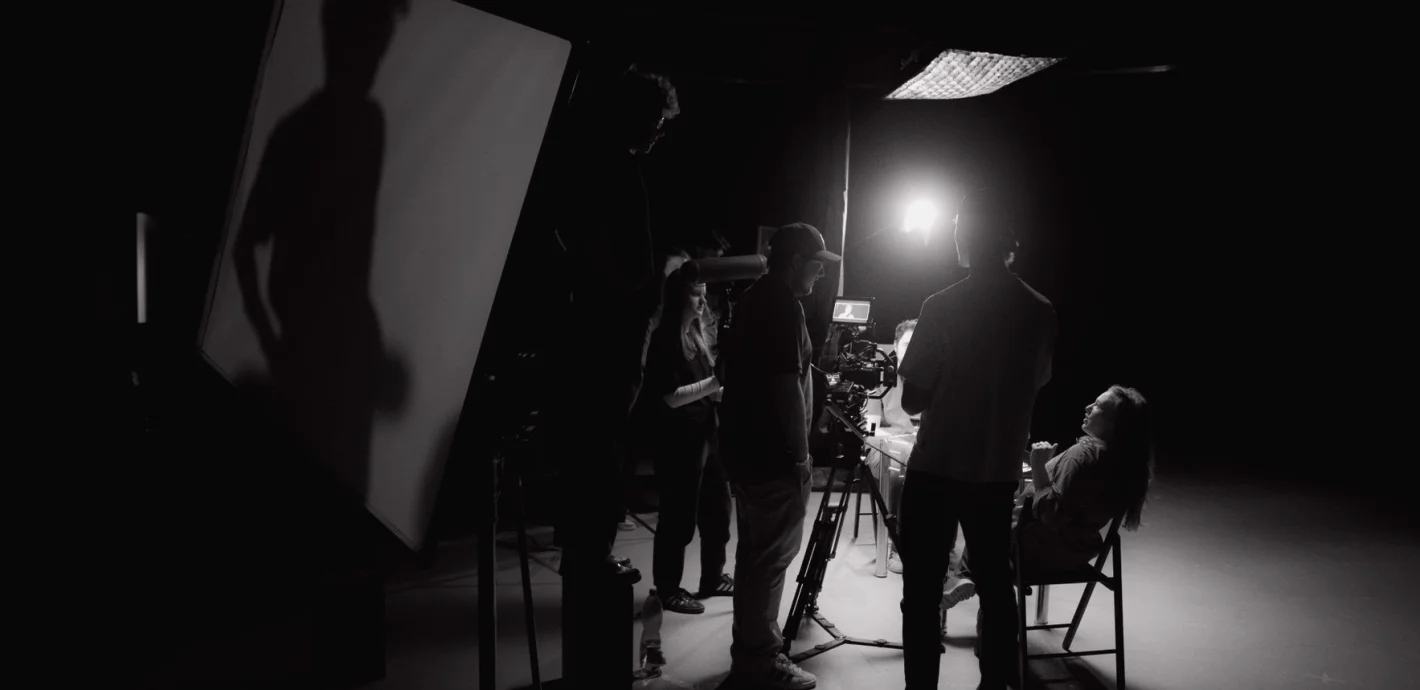
Run the briefing itself in fifteen minutes
On the day, gather everyone for fifteen minutes before the rehearsal and no more. Stand by the plan, not by a screen. Start with the purpose of the event and who is in the audience, then walk the running order, pointing at the places where each person will be. Spend longer on the moments that carry risk: a speaker who walks into the audience, a video roll-in, a change of presenter.
Ask each lead to repeat their cue back in their own words. It sounds like a schoolroom habit, yet it exposes misunderstandings in seconds, and nobody feels singled out because everyone does it. Keep your own voice level and unhurried; a calm briefing sets the tone for the whole day.
Close by naming the decision maker for the show and the person to find if the decision maker cannot be reached. Then let people get on with their work. A briefing that overruns steals the rehearsal time it was meant to protect.
- Purpose and audience first
- Running order walked in sequence
- Cues repeated back by each lead
- Decision maker and deputy named aloud
Rehearse the failures, not only the show
A rehearsal that only plays the happy path teaches little. Choose two or three plausible failures and talk through them aloud: a radio microphone drops out, a laptop will not output a presentation, a camera loses its feed. For each, agree who notices, who announces it on talkback and what the fallback is. A spare handheld microphone at the lectern and a second presentation machine cost little and settle most of these.
Run the opening and the first speaker change at full speed, with the real graphics and the real audio levels. The first two minutes of a live event are the most exposed, and the crew gains confidence from seeing them go smoothly once.
Note what you change during the rehearsal on the shared sheet and tell the people affected. Verbal changes passed along the gallery have a way of reaching half the crew.
Close the day with a short debrief
When the audience has gone and the kit is coiled, take five minutes before anyone leaves. Ask three questions: what worked, what slowed us down, what should the next briefing say differently. Write the answers on the same document so that they travel with the project rather than living in someone's memory.
Thank people by name for specific things, not in general terms. Crews remember being noticed, and they bring that attitude to the next job. Note equipment faults and missing items straight away while the details are fresh, and pass them to whoever manages the kit.
Send the updated document to the producer within a couple of days. The next event, even at the same venue, starts from a better page than this one did.
A good crew briefing is mostly preparation: one short document, one clear owner per decision, and a rehearsal that tests what might fail. None of it needs special equipment or a large budget. It asks for a little time before the day and some discipline during it. If you would like a second pair of eyes on your own briefing before a conference or broadcast, the contact page is the place to start.
Helen Marshall
Founder and Studio DesignerHelen has designed television studios and galleries for over fifteen years and leads our design planning work.