
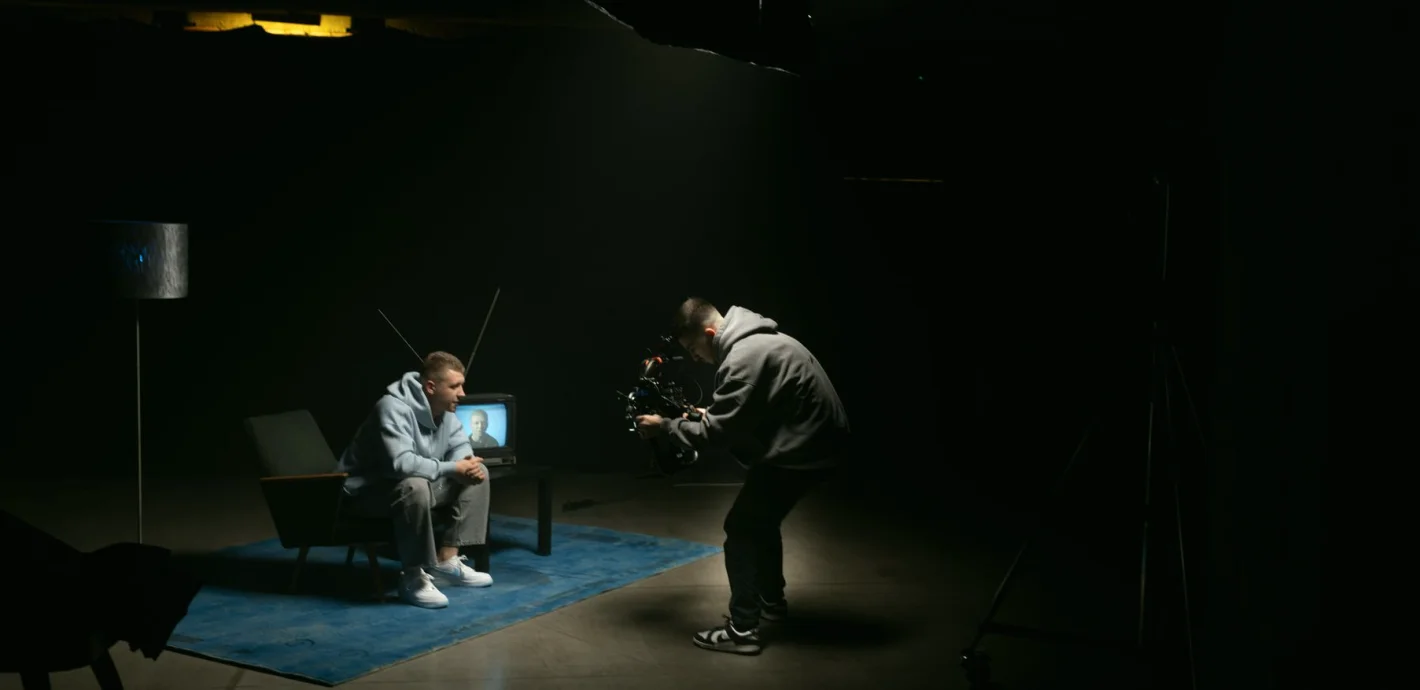
Hiring a Crew Briefing Day or Full On-Site Planning for Your Live Event
Two ways to use live event production support: a focused crew briefing before the show, or technical planning on site from load-in. We compare them and say which suits most conferences.
Two ways to use on-site support
Most enquiries we receive for live event production support fall into one of two shapes. The first is a crew briefing: a single focused day, usually the day before doors open, in which we walk your technical team through the plan, the cue structure and the points where things tend to go wrong. The second is full on-site technical planning, where one of us is present from load-in and works alongside your crew until the last camera is derigged.
Neither is better in every case. The choice depends on how much of the plan already exists on paper, how experienced the crew is with this kind of room, and how much of the production is new to the people running it. A conference with a familiar format and a settled crew has different needs from a first live broadcast from an unfamiliar venue.
This article compares the two so that you can decide before the quotation stage, rather than discovering the gap on the morning of the show.
What a crew briefing day covers
A briefing day starts with the documents you already hold: the running order, the floor plan, the camera positions and the intercom list. We read them with the people who will act on them, and we ask the dull questions early. Who calls the cues? Who has authority to stop the show? Where does the feed go if the main link fails?
The afternoon is usually spent in the room itself, checking sightlines, cable routes and the position of the gallery against the plan. We brief each department separately and then together, so that camera operators, sound, lighting and the vision mixer hear the same version of events.
The day ends with a short written summary of decisions and open points. That summary is the useful part afterwards, because it is what the crew carries into the show when we are no longer in the building.
- Review of running order, floor plan and camera positions
- Department briefings, then a joint walk-through
- Intercom, cue and fallback arrangements agreed
- Written summary of decisions and open points
What full on-site planning adds
Full on-site planning starts earlier and stays longer. We join at load-in, which means we see the room as it really is rather than as the venue sheet describes it. Power is often not where it was promised, and rigging points rarely match the drawing. Catching that on the first morning leaves time to change the plan instead of improvising around it.
During build and line-up, we work alongside your technical lead, checking each department's progress against the plan and adjusting the schedule as problems appear. We attend rehearsals, note what the crew finds awkward, and make changes while there is still time to test them.
On show day we stay available to the technical lead, not to take over but to act as a second pair of eyes. That presence costs more than a briefing, and it is worth it when the production is complicated or the crew has not worked together before.
Where each option fits
A briefing day suits a conference or recorded event with a clear format, a crew that has worked together, and a venue the team already knows. The plan exists, the people are capable, and what is missing is a shared understanding in the days before the show. A single day gives that at a modest cost.
Full planning suits a live broadcast, a multi-room event, a first visit to a venue, or any production where the technical lead is also covering other duties. It also suits events where a failure would be public and hard to repair, such as a live stream with a remote audience watching in real time.
A middle path exists. Some clients book a briefing day and add a half day of attendance on the show itself. We are happy to quote for that, provided the scope is written down so that both sides know where our responsibility begins and ends.
Our recommendation for most teams
For most conferences and corporate events with a competent crew, we recommend the briefing day, booked a week or so before the event so that anything it uncovers can still be fixed. It gives the best return for the least spend, and it works well alongside your own technical lead rather than around them.
We recommend full on-site planning where the production is live to an audience beyond the room, where the venue is new to you, or where the crew is assembled for the occasion. The cost is higher, but the risk it reduces is larger too.
If you are unsure, send us the running order and a description of the room through the contact page. We will say honestly which option we think fits, even when that is the cheaper one.
Both options exist for the same reason: to make sure the people running a live event share one plan before the first cue. A briefing day does that efficiently for settled crews and familiar formats, while full on-site planning protects the more exposed productions. Choose by the risk in the room, not by the size of the budget, and ask us if the answer is not obvious.
Daniel Okafor
Camera Systems EngineerDaniel specifies and commissions camera and control systems for studios and outside broadcasts.